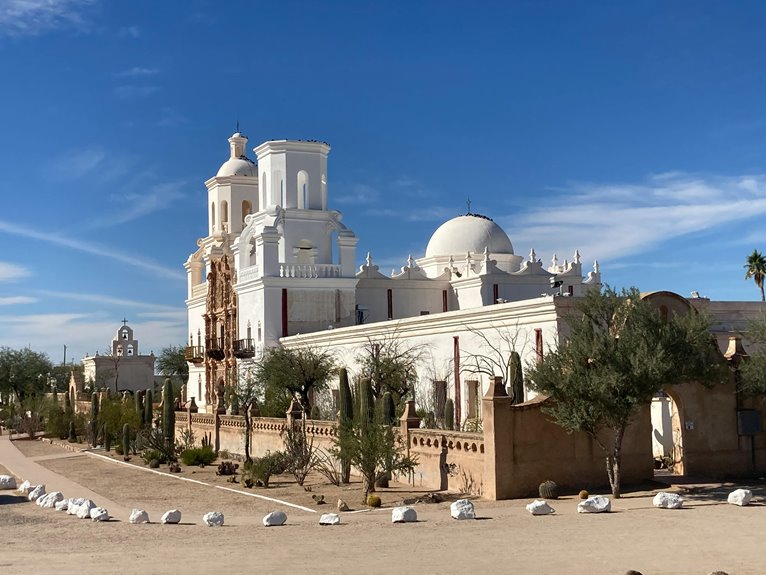
When you think of Tucson, its unique historic landmarks might not be the first thing that comes to mind, but they offer a fascinating glimpse into the city's diverse past. From the grandeur of Mission San Xavier Del Bac to the charm of the El Presidio Historic District, each site reflects a tapestry of cultures and stories waiting for you to explore. As you uncover these treasures, you'll find that Tucson's history is more than just buildings; it's a living narrative that shapes the community today. What other hidden gems are just waiting to be discovered?
Old Pueblo Overview
Tucson, often called the "Old Pueblo," is a city rich in history and culture, blending Native American, Spanish, and Mexican influences. As you explore its streets, you'll notice remnants of its diverse past reflected in the architecture and landmarks scattered throughout the area. Each site tells a story, inviting you to investigate deeper into Tucson's heritage.
You can start your journey at the historic downtown district, where adobe buildings serve as a reminder of the city's early days. Strolling through this vibrant area, you'll encounter eclectic shops, art galleries, and local eateries, all of which echo the multicultural essence of Tucson.
The city's unique blend of traditions is also evident in its annual festivals, celebrating everything from music to culinary delights.
Don't miss the chance to visit the numerous historical markers that dot the landscape. They provide insights into significant events and figures that shaped Tucson.
Mission San Xavier Del Bac
One of the most stunning examples of Spanish colonial architecture in the Southwest, Mission San Xavier Del Bac, captivates visitors with its intricate design and historical significance. Founded in 1700 and completed in 1797, this mission stands as a representation of the rich cultural tapestry of Tucson.
As you approach the mission, you're greeted by its striking white façade, adorned with elaborate carvings and vibrant murals that reflect a blend of Native American and Spanish influences.
Inside, the serene atmosphere invites you to explore its beautifully crafted altars and religious artifacts. You can't help but admire the craftsmanship that went into each detail, from the ornate woodwork to the stunning ceiling.
The mission's history is woven with stories of the Tohono O'odham people and Spanish settlers, making it an essential piece of Tucson's heritage.
Visiting Mission San Xavier Del Bac isn't just about appreciating its architectural beauty; it's about connecting with the past.
Take time to stroll through the surrounding gardens, and let the peaceful ambiance wash over you. You'll leave with a deeper understanding of Tucson's historical landscape and the enduring spirit of its community.
El Presidio Historic District
Step into the El Presidio Historic District, where Tucson's colonial past comes alive through its charming streets and preserved adobe structures. This area is rich in history, showcasing the city's roots as a Spanish settlement.
As you wander, you'll encounter restored buildings that date back to the late 1700s, each with its own story to tell. You can explore the remnants of the original Presidio, once a military fort that played a vital role in the area's defense.
Don't miss the stunning St. Augustine Cathedral, an architectural gem that reflects the region's blend of cultures. While you're here, take a moment to appreciate the vibrant murals and art that adorn the district, celebrating Tucson's diverse heritage.
Every corner reveals a piece of the past, inviting you to imagine life in early Tucson. You might also find quaint shops and local eateries, perfect for a quick break.
Whether you're a history buff or just looking for a picturesque stroll, El Presidio offers an unforgettable glimpse into the heart of Tucson's history. So, lace up your walking shoes and plunge into this enchanting district that echoes the stories of yesteryear.
The Rialto Theatre
Nestled not far from the vibrant streets of El Presidio, The Rialto Theatre stands as a tribute to Tucson's rich cultural tapestry. This historic venue, built in 1920, originally showcased silent films and vaudeville acts.
As you step inside, you're immediately enveloped by its stunning art deco design and the warm glow of vintage chandeliers, evoking a sense of nostalgia that's hard to resist.
Today, The Rialto Theatre serves as a cherished performance space, hosting a variety of shows, from live music to film screenings. You'll find everything from indie bands to renowned artists gracing its stage, making it a hub for both local talent and national acts.
The theatre's commitment to preserving its historical essence while embracing modern entertainment makes it a must-visit. You can catch a show, enjoy a drink at the bar, or simply soak in the atmosphere.
Don't forget to explore the surrounding area, where eateries and shops reflect Tucson's eclectic spirit. Whether you're a history buff or a music lover, The Rialto Theatre offers a unique experience that connects you to the heart of Tucson's cultural scene.
Tucson's Historic Train Depot
As you approach Tucson's Historic Train Depot, you'll immediately sense the echoes of a bygone era woven into its architecture. Built in 1907, this beautiful structure showcases Mission Revival style, featuring arched windows and terracotta tiles that speak to the region's cultural heritage.
You can almost hear the hustle and bustle of travelers from generations past as you step inside. The depot once served as a crucial hub for the Southern Pacific Railroad, connecting Tucson to major cities across the Southwest.
It's hard not to be captivated by the vintage ticket counters and the historical displays that recount stories of train travel. You might even spot the original waiting room, where countless passengers awaited their journeys.
Today, the depot isn't just a relic of history; it's also a vibrant part of Tucson's community. You can enjoy various events and art exhibits, making it a lively gathering place.
Don't forget to explore the surrounding area, where you'll find the beautiful gardens and public art installations that enhance the site. Your visit to Tucson's Historic Train Depot promises an enriching experience that bridges the past and present.
The Fox Theatre
While exploring Tucson's vibrant arts scene, you'll certainly want to check out The Fox Theatre, a stunning example of historic architecture that dates back to 1929.
This beautifully restored venue showcases a mix of Spanish Colonial Revival and Art Deco styles, creating an enchanting atmosphere for guests.
As you step inside, the ornate details, including intricate plasterwork and vintage chandeliers, transport you back in time. The theatre originally hosted silent films and vaudeville performances, and it still retains a sense of nostalgia that captivates audiences today.
You can catch a variety of performances, from concerts to classic films, making it a hub for entertainment lovers.
The Fox Theatre also offers guided tours, giving you a deeper understanding of its rich history and significance in Tucson.
Don't forget to check their schedule ahead of your visit—many events sell out quickly!
Whether you're a local or a visitor, experiencing a show at The Fox Theatre will leave you with lasting memories and a newfound appreciation for Tucson's cultural heritage.
La Casa Cordova
Just a short distance from The Fox Theatre, you'll find La Casa Cordova, a remarkable historic building that reflects Tucson's rich cultural tapestry. Built in the 19th century, this adobe home showcases stunning architectural details that merge Spanish Colonial and Native American influences.
As you approach, notice the intricate woodwork and vibrant tile that adorns the exterior.
Step inside, and you'll be transported back in time. The interior features spacious rooms filled with natural light, creating a warm, inviting atmosphere. You can almost hear the echoes of past inhabitants as you wander through the halls.
La Casa Cordova served as a family residence, and its history is intertwined with the story of Tucson itself.
Make sure to explore the beautiful courtyard, where lush vegetation and traditional fountain evoke a sense of tranquility. This peaceful retreat is perfect for reflection after your urban adventures.
The building hosts various community events and art exhibitions, making it a vibrant part of Tucson's contemporary culture as well.
Whether you're a history buff or simply curious, La Casa Cordova is a must-visit landmark that captures the heart of this unique desert city.
The Sosa-Carrillo-Fremont House
Nestled between the bustling streets of Tucson, the Sosa-Carrillo-Fremont House stands as a tribute to the city's rich history and cultural heritage. Built in 1870, this adobe structure showcases the unique architectural blend of Spanish and Mexican influences that define Tucson's past.
As you explore the house, you'll find original furnishings and artifacts that transport you back to a time when it served as a vibrant social hub.
The house is named after three notable figures: the Sosa family, who were early settlers, Carrillo, a prominent merchant, and John C. Frémont, an explorer and politician. Each played an essential role in shaping the region's development. You can almost feel their stories echoing through the walls as you walk through the rooms.
As you stroll through the beautifully landscaped gardens, take a moment to appreciate the serene atmosphere that surrounds this historic site. Guided tours are available, providing deeper insights into the house's significance and the lives of those who once called it home.
Visiting the Sosa-Carrillo-Fremont House not only enriches your understanding of Tucson's heritage but also allows you to connect with the vibrant tapestry of its past.
Frequently Asked Questions
Are There Guided Tours Available for Tucson's Historic Landmarks?
Yes, there are guided tours available for Tucson's historic landmarks.
You can choose from walking tours, bus tours, or even specialized tours focusing on architecture or local history.
These guided experiences give you an insider's perspective, making it easier to appreciate the rich heritage of the area.
You'll find knowledgeable guides enthusiastic to share stories and insights, enhancing your understanding of Tucson's unique past.
Don't miss out on exploring these fascinating sites!
What Is the Best Time to Visit These Historic Sites?
The best time to visit historic sites in Tucson is during the cooler months, typically from October to April.
You'll enjoy pleasant temperatures that make exploring more enjoyable. Mornings or late afternoons are ideal for avoiding the midday heat and crowds.
Plus, this timing allows you to experience local events and festivals, which often highlight the city's rich history.
Don't forget your camera—you'll want to capture the stunning architecture and vibrant atmosphere!
Are Any of These Landmarks Wheelchair Accessible?
Yes, many of the historic landmarks you'll visit are wheelchair accessible.
You'll find ramps and paths designed to accommodate mobility devices, making your experience enjoyable and stress-free.
It's a good idea to check specific sites ahead of time for any accessibility features or potential restrictions.
By planning accordingly, you can guarantee a smooth visit while exploring the rich history without any barriers.
Enjoy your time discovering these incredible places!
Can I Take Photographs Inside the Historic Buildings?
Yes, you can take photographs inside most historic buildings, but it's always best to check for specific rules at each location.
Some places may have restrictions to protect artifacts or maintain a certain atmosphere. You'll often find signs or staff available to guide you.
Remember to be respectful of the space and other visitors while capturing those moments—your photos will help preserve the memories of your visit!
Enjoy your photography adventure!
Are There Any Special Events Held at These Landmarks?
Absolutely, you'll find various special events held at these historic landmarks throughout the year.
From guided tours and educational workshops to seasonal festivals and arts performances, there's always something happening.
You might even catch a unique exhibit or a community gathering that highlights local culture.
Keep an eye on their calendars or websites, so you don't miss out on any exciting opportunities to engage with the history and charm of these locations!
Conclusion
As you explore Tucson's historic landmarks, you'll gain a deeper understanding of the city's rich cultural tapestry. From the stunning Mission San Xavier Del Bac to the charming streets of the El Presidio Historic District, each site invites you to connect with the past. Don't miss the vibrant stories behind the Rialto Theatre and the Fox Theatre. Embrace the opportunity to appreciate Tucson's unique heritage and let its history inspire your journey through the Old Pueblo.